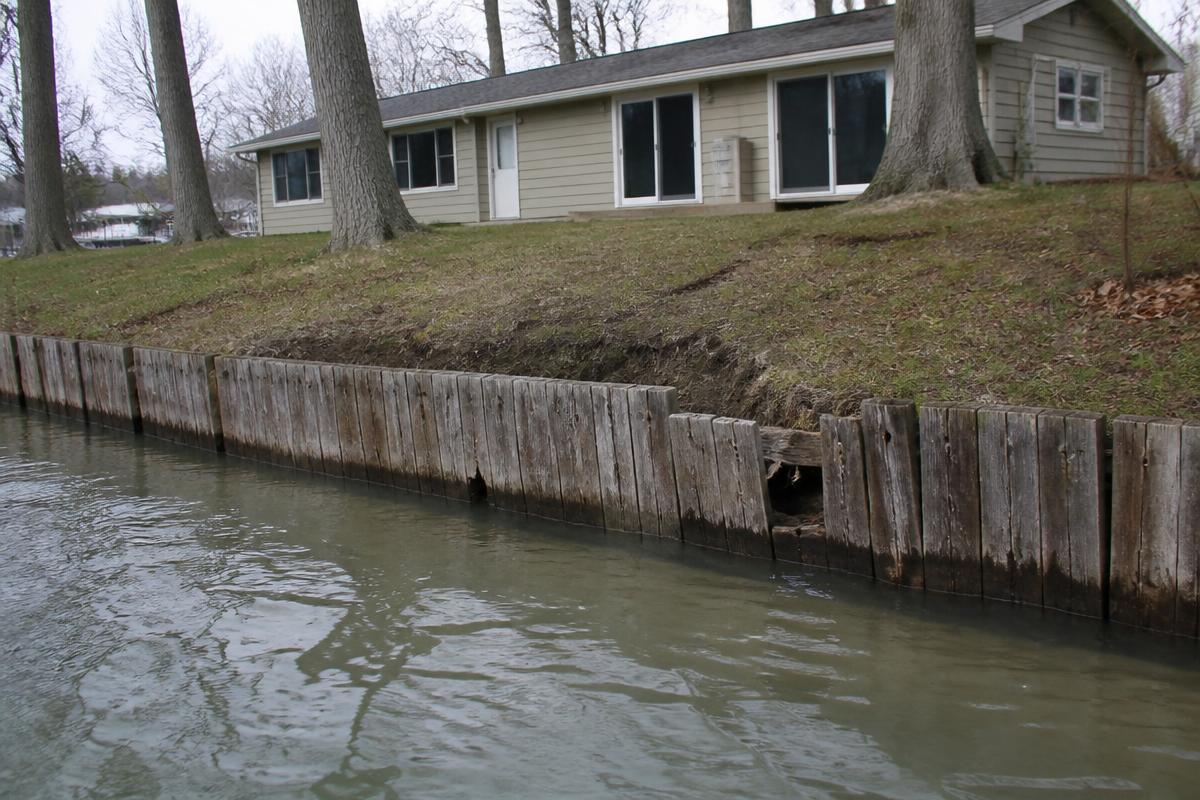
Signs owners often notice first
- The wall is visibly leaning, bulging or has shifted out of line.
- Panels, blocks or timbers are cracked, split, missing or separating.
- Soil keeps disappearing behind the wall, sometimes leaving voids or sinkholes.
- Steel components show heavy corrosion; timber is soft or rotting.
- Repairs have already been made more than once in the same area.
These are observations, not diagnoses. Only a qualified provider who evaluates the property can say what is actually happening and whether replacement is warranted.
Repair or replace?
There is no universal rule. A localized problem on an otherwise sound wall can sometimes be addressed as a repair, while widespread deterioration, ongoing movement or repeated failures often lead to replacement. The age of the wall, the material, the condition of anchoring, and what is behind the wall all factor in — which is exactly the kind of judgment a provider makes on site.
What replacement projects generally involve
- Evaluation of the existing wall and the ground behind it.
- A decision about removal versus building in front of or behind the old wall.
- Any permitting or approvals that apply locally.
- Access planning — barge, land equipment, or both.
- Installation, backfill, drainage details and restoration of the area behind the wall.
A note on materials and construction
Different projects may use different materials and construction systems — steel, vinyl/composite, concrete and timber are all common. Appropriate options can depend on the property, water conditions, project requirements and applicable local requirements. A qualified provider can evaluate the specific project. SeawallQuote.com does not recommend a material, determine structural requirements or provide engineering advice.