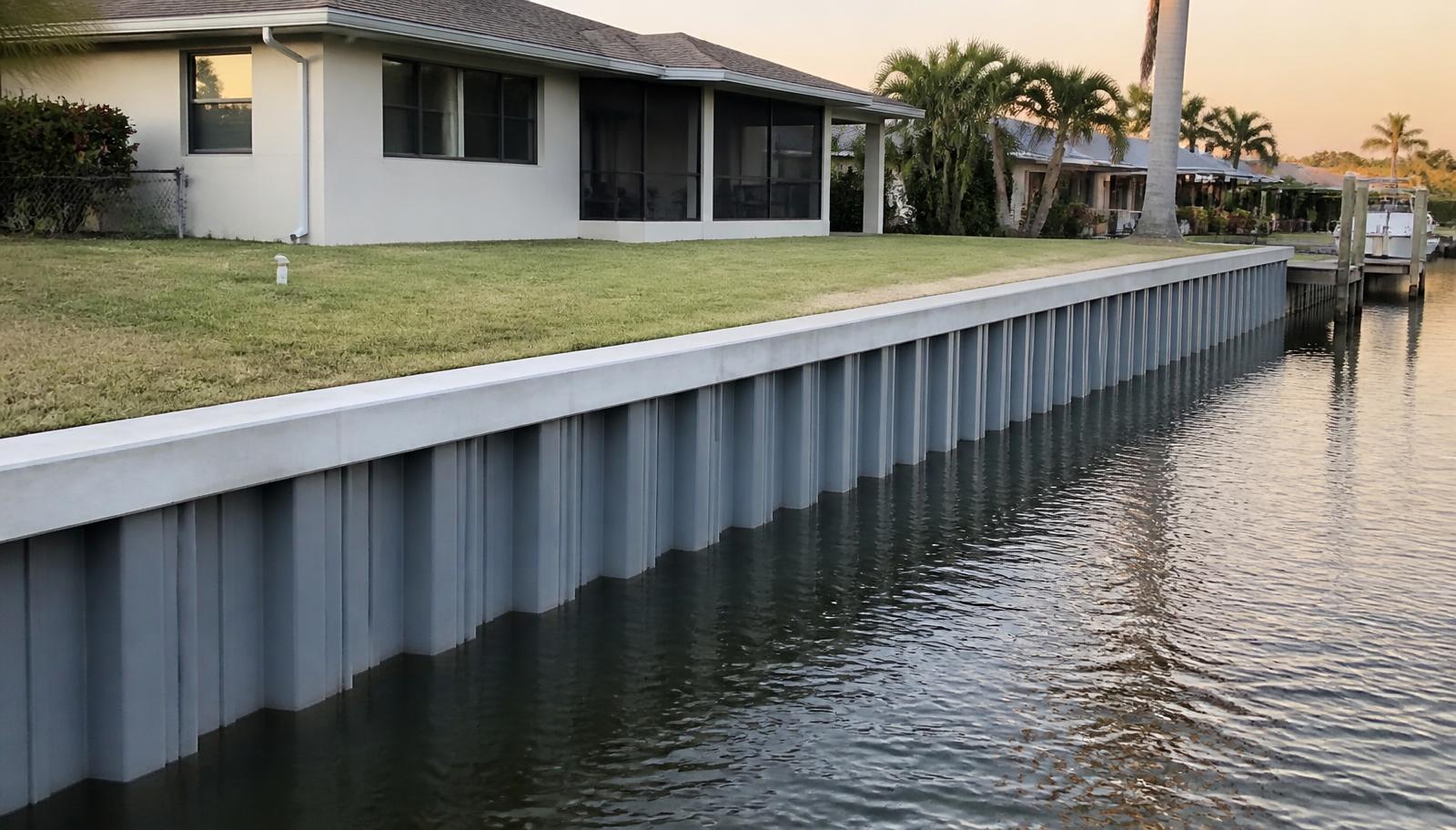
When property owners consider a new seawall
A new seawall usually comes up when a shoreline is losing ground — the lawn edge keeps retreating, the bank slumps after storms, or an unprotected slope is starting to undercut something worth protecting. It also comes up when a property owner wants a defined, usable water's edge instead of a soft, eroding bank.
What a new seawall project generally involves
- An on-site evaluation of the shoreline, soils, water conditions and access.
- A design or system selection appropriate for the site, made by the provider.
- Any permitting or approvals that apply in the area.
- Mobilizing equipment and materials to the waterfront, which is often the hard part.
- Installation of the wall, along with backfill, drainage details and a cap or finish.
The specifics vary enormously by region and property. SeawallQuote.com does not determine structural requirements, permitting needs or the right approach for any particular site.
Details worth having ready
You do not need to know any of this to submit a request, but it helps if you do: roughly how much waterfront you have, whether the water is a lake, river, canal or coastal, how the shoreline behaves in high water, and how equipment could reach the water's edge.
A note on materials and construction
Different projects may use different materials and construction systems — steel, vinyl/composite, concrete and timber are all common. Appropriate options can depend on the property, water conditions, project requirements and applicable local requirements. A qualified provider can evaluate the specific project. SeawallQuote.com does not recommend a material, determine structural requirements or provide engineering advice.
Next step
Describe the property and what you are hoping to protect. Independent seawall professionals that may serve the area can take it from there.