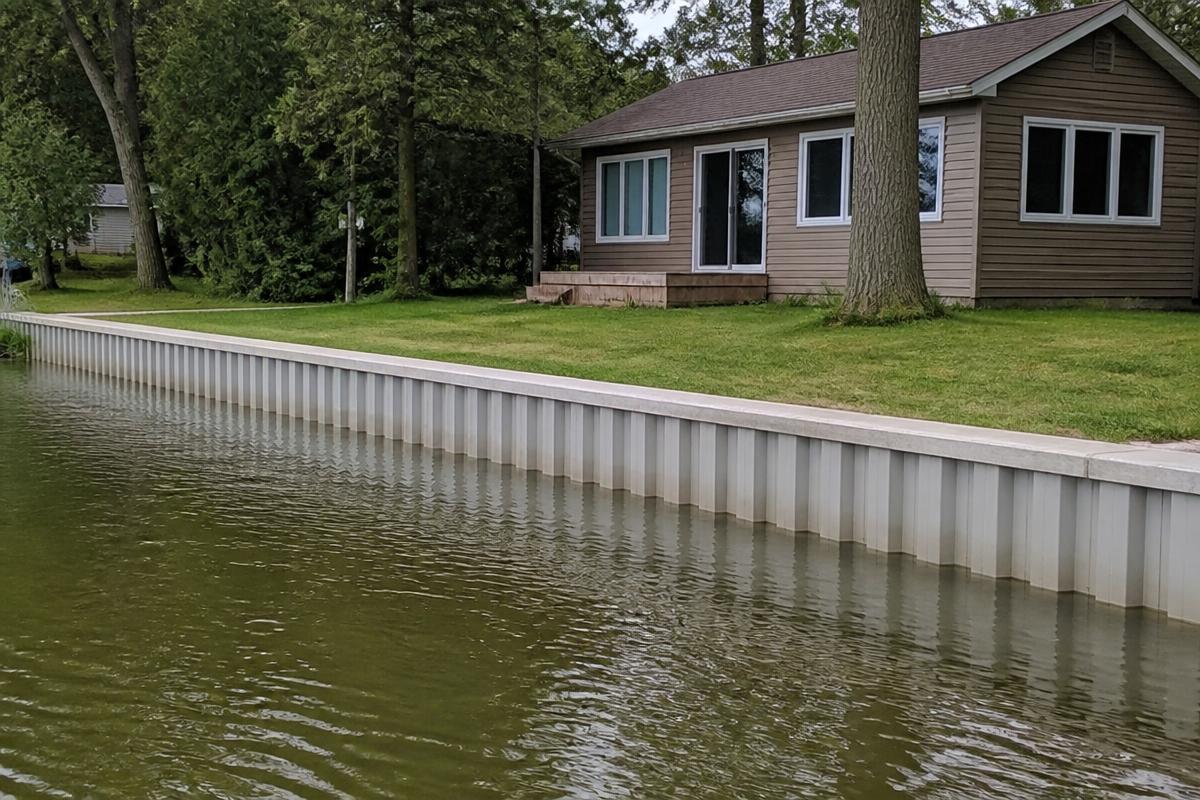
What lakefront owners commonly deal with
- Boat wake and wind-driven waves working at the same stretch of wall year after year.
- Ice movement in colder regions, which can push and lift wall sections.
- Seasonal or managed water levels that expose and submerge parts of the structure.
- Older timber walls installed decades ago that are reaching the end of their life.
- Soil loss behind the wall showing up as soft spots or depressions in the lawn.
Access on lake property
Many lake lots are long, narrow and sloped, with cabins, trees and septic systems between the road and the water. How equipment reaches the shoreline is often the single biggest practical question on a lake project, and it is one a provider needs to see in person.
Seasonal timing
In much of the country, lake seawall work happens in a limited window each year. If your timeframe is flexible, say so on the request form — and if it is not, say that too.
A note on materials and construction
Different projects may use different materials and construction systems — steel, vinyl/composite, concrete and timber are all common. Appropriate options can depend on the property, water conditions, project requirements and applicable local requirements. A qualified provider can evaluate the specific project. SeawallQuote.com does not recommend a material, determine structural requirements or provide engineering advice.